Figure learning hub
Qu Yuan
Read Qu Yuan through the plants, journeys, and first-person voice of Li Sao.
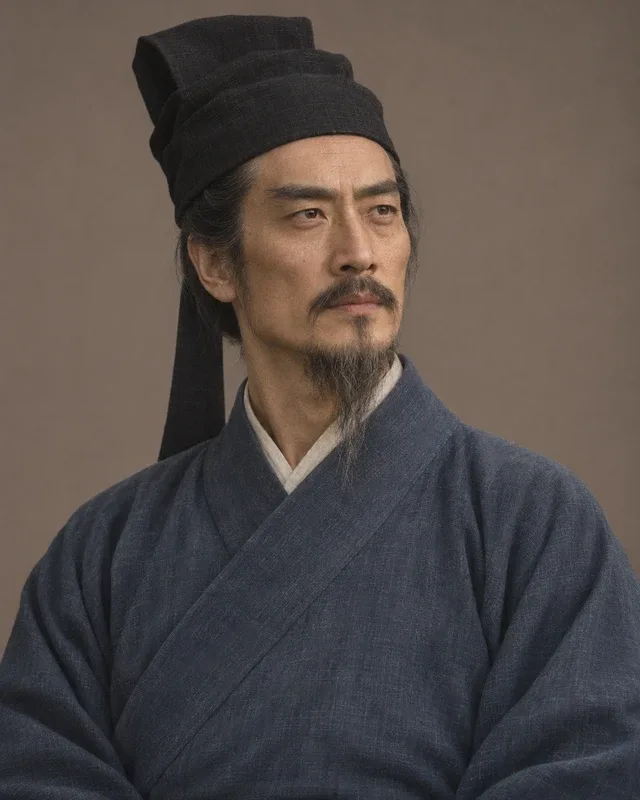
Qu Ping of Chu
From King Huai’s appointment to exile under King Qingxiang
Sima Qian first records Qu Yuan’s appointment under King Huai. He took part in deliberations at court and received envoys. Later in the biography comes the dispute over a draft decree. Another official tries to take the draft and accuses Qu Yuan of claiming credit after he refuses. In this part of the account, King Huai distances himself from Qu Yuan, and Sima Qian links the setback to Li Sao. The exile comes in a later episode. After King Qingxiang takes the throne, Zilan has the same official speak against Qu Yuan.[1]
The speaker and his fragrant plants
The voice speaking in Li Sao gives his ancestry and names before telling us about the fragrant plants he wears.[2] This is the self-portrait presented within the poem. The poem goes on to place the withering of plants beside the approach of old age.[2] The later line about the long road, “Lu manman qi xiuyuan xi,” gains urgency as the time available to travel it begins to feel short.[3]
Autumn wind over Dongting
The Lady of the Xiang brings together autumn wind, ripples, and falling leaves. It gives Lake Dongting a sound and a season in a few lines.[4] Heavenly Questions begins by asking who passed down the story of earliest times. The poem keeps asking questions, from the formation of the world to figures in the distant past.[5]
Selected readings
Sources and editorial notes
- Records of the Grand Historian, vol. 84: Qu Yuan
In the Qu Yuan section, lines 135–138 describe his lineage, service under King Huai, and the dispute over the draft. The same passage records the king’s anger and his subsequent estrangement from Qu Yuan. Lines 146–151 describe King Qingxiang’s accession, Zilan’s accusation through the official, and the exile. Line 162 explicitly records his death at the Miluo.
- Li Sao, first passage: Ornaments and the fear of lateness
In the first passage, the speaker wears fragrant plants and braids autumn orchids into a pendant. The lines about withering plants and old age come a few lines later.
- Li Sao, the journey: The long road
This passage describes departure from Cangwu and the approach of evening. The line about the long road leads into the search high and low.
- Nine Songs: The Lady of the Xiang
The opening describes the autumn wind, Lake Dongting, and falling leaves.
- Heavenly Questions: The opening
The first question asks who first handed down the story of earliest times.