Figure learning hub
Jiang Kui
Read the preface, then listen to the city
Southern Song · Yangzhou and Shihu appear in his prefaces
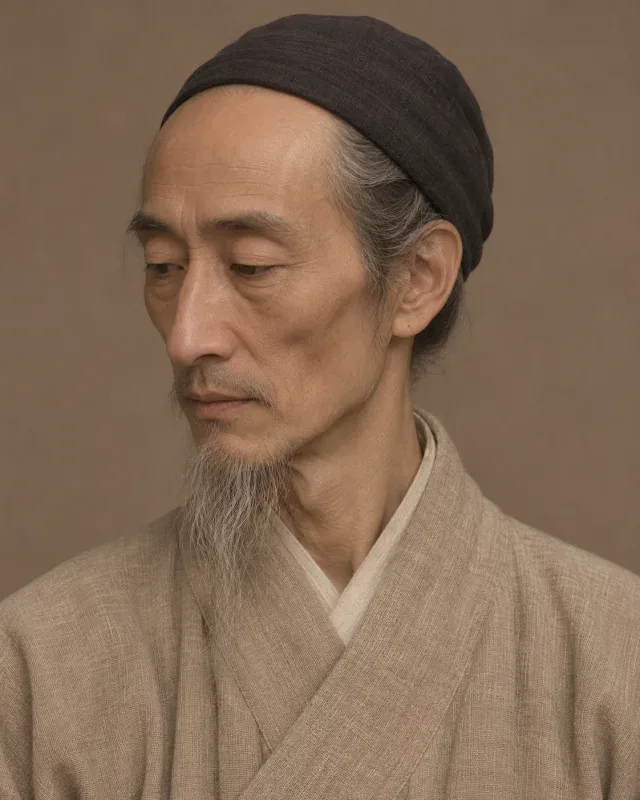
The White Stone Daoist
- Courtesy name
- Yaozhang
- Art name
- Baishi Daoren, the White Stone Daoist
- Life dates
- Southern Song. Often catalogued as c. 1155–c. 1221. Other research places his death around 1209.[1]
- Origins and places
- Commonly recorded as registered in Poyang, Raozhou. His travels took him to places including Yangzhou, Huzhou, and Shihu near Suzhou.
Yangzhou in 1176, Shihu in 1191
Jiang did not follow a conventional official career.[1] His works and their prefaces anchor parts of his travels: a visit to Yangzhou in 1176 produced Yang Zhou Man, and a winter visit to Shihu in 1191 led to the new tunes Fan Chengda requested. The prefaces give these dates directly, a firmer footing than assigning a year to every undated lyric.[2][3]
How the Shihu story grew
Jiang says that Fan requested new tunes and asked performers to learn them. The later Yaoshan tang waiji adds a story about Xiaohong. Reading the accounts together shows how a short record of composition grew into a story with named people and a fuller plot. Jiang’s preface describes the composition and rehearsal.[3] The story about Xiaohong comes from the later Yaoshan tang waiji.[4]
Read the preface, then listen to the city
Jiang Kui, courtesy name Yaozhang, is also known as the White Stone Daoist. His prefaces often deserve to be read alongside the lyrics. They take us from a garrison horn heard in Yangzhou to tunes written during a winter visit to Shihu, giving us some of the circumstances from which each lyric began.[2][3]
The horn and the emptied city
The preface to Yang Zhou Man places the visit at the winter solstice of 1176. Jiang enters after snow and hears a garrison horn. The lyric brings in the Yangzhou of Du Mu’s poetry, letting the city before him overlap with a city remembered through literature. Read the sights and sounds in the preface first, then look for the places where the two cities meet.[2]
Two new tunes at Shihu
The preface to An Xiang and Shu Ying recalls a snowy visit to Shihu. Fan Chengda asked Jiang for new lyrics and tunes and had performers learn them. The author’s account is closer to the occasion than details supplied by later story collections. Read the pair together: plum blossom calls up earlier times in An Xiang and draws other stories into the lyric in Shu Ying.[3]
Selected readings
Read together
Read with Zhou Bangyan
Jiang’s prefaces often explain why a tune was composed, while Zhou’s biography records his ability to devise tunes. Compare those kinds of evidence, then trace how Yang Zhou Man and Rui Long Yin move from a city scene into the past.
Sources and editorial notes
- Research on Jiang Kui’s life
The study gives the familiar 1155–1221 dates and surveys arguments for earlier death dates in its notes.
- Preface to Yang Zhou Man
The visit and the garrison horn come from Jiang’s preface.
- Preface to An Xiang and Shu Ying
The account of composition at Shihu comes from Jiang’s preface.
- Yaoshan tang waiji, volume 61
A later anecdotal account for comparison with Jiang’s own preface.