Figure learning hub
Zhou Bangyan
Three layers of time on an old street
c. 1056–1121 · Qiantang, Bianjing, Lishui
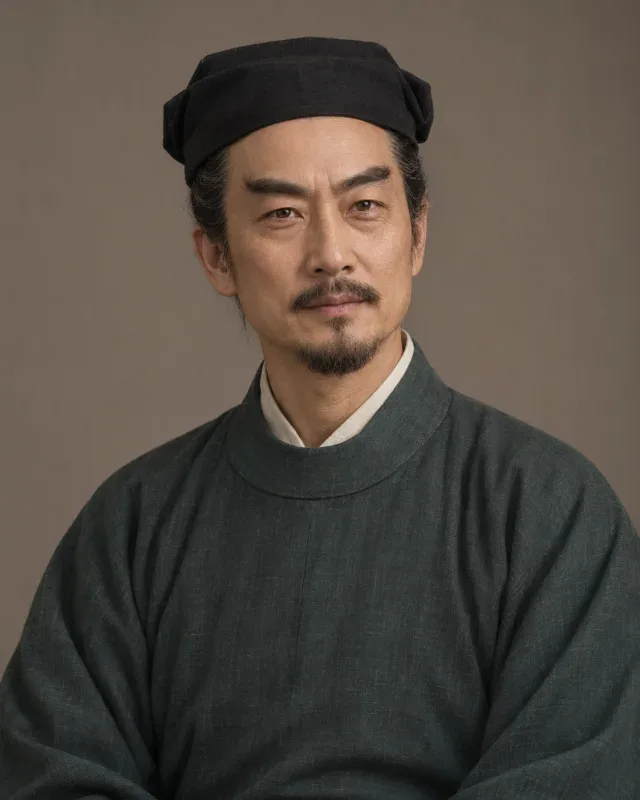
From Qiantang to the Music Bureau
- Courtesy name
- Meicheng
- Art name
- Qingzhen Jushi
- Origins and places
- Qiantang, now Hangzhou, Zhejiang. Held posts in Bianjing, Luzhou, Lishui, and other places.
Five years at the Imperial University
After arriving in Bianjing, Zhou presented a long rhapsody on the capital. The History of the Song says Emperor Shenzong had it read aloud and appointed Zhou, then a student, to an office at the Imperial University. He held that post for five years. Later he served locally and returned to the capital. The biography traces his rise through rhapsody and public office before his career intersected with musical administration.[3]
What the Dasheng appointment tells us
The dynastic history records Zhou’s appointment at the Dasheng office and separately notes that he could devise tunes. One statement concerns office, the other a creative skill. The surviving words of Liu Chou and Rui Long Yin let us follow their stanza divisions and changes of scene. Reconstructing a particular performance or commission would require further evidence, such as a preface, notation, or a contemporary record.[3]
Three layers of time on an old street
Zhou Bangyan, courtesy name Meicheng, came from Qiantang. The dynastic history says that he presented a rhapsody on Bianjing and received an appointment at the Imperial University. Later he governed Lishui and directed the Dasheng music office.[3] Rui Long Yin offers a way into his work: a return to an old street moves among the scene at hand, an earlier encounter, and the later visit.
Returning to Zhangtai Road
Rui Long Yin opens by recognizing signs of spring in familiar streets. An encounter from the past surfaces, and then the lyric turns back to the search in the present. Mark those shifts as you read. The long lyric becomes easier to follow once each detail has a place in time.
The wayside pavilion and fallen blossoms
Lan Ling Wang begins with willows that lead the eye toward departure. Liu Chou goes from the impossibility of holding spring to the act of picking up a fallen blossom. Returning to Rui Long Yin after those two, look for the image that carries each transition. The Dasheng post is documented; a claim that a particular lyric was commissioned needs its own evidence.[3]
Selected readings
Read together
Read with Liu Yong
In Ba Sheng Gan Zhou and Rui Long Yin, what the speaker sees brings absent people to mind. Liu gives the act of looking to two distant people, while Zhou repeatedly shifts between past and present during a return visit.
Sources and editorial notes
- Hangzhou Municipal Archives · Zhou Bangyan (2011)
This entry gives 1056–1121, the courtesy name Meicheng, and the art name Qingzhen Jushi.
- Hangzhou Municipal Archives · Zhou Bangyan (2009)
This entry gives 1057 for his birth and likewise dates his death to 1121, illustrating the discrepancy over his birth year.
- History of the Song · Zhou Bangyan
The biography records the rhapsody, these appointments, and his ability to devise tunes.