Figure learning hub
Mencius
Meet Mencius through his exchanges with rulers on profit, livelihood, and humane government, then read Liang Hui Wang I in Chinese and English.
Mengzi · Meng Ke · 孟子
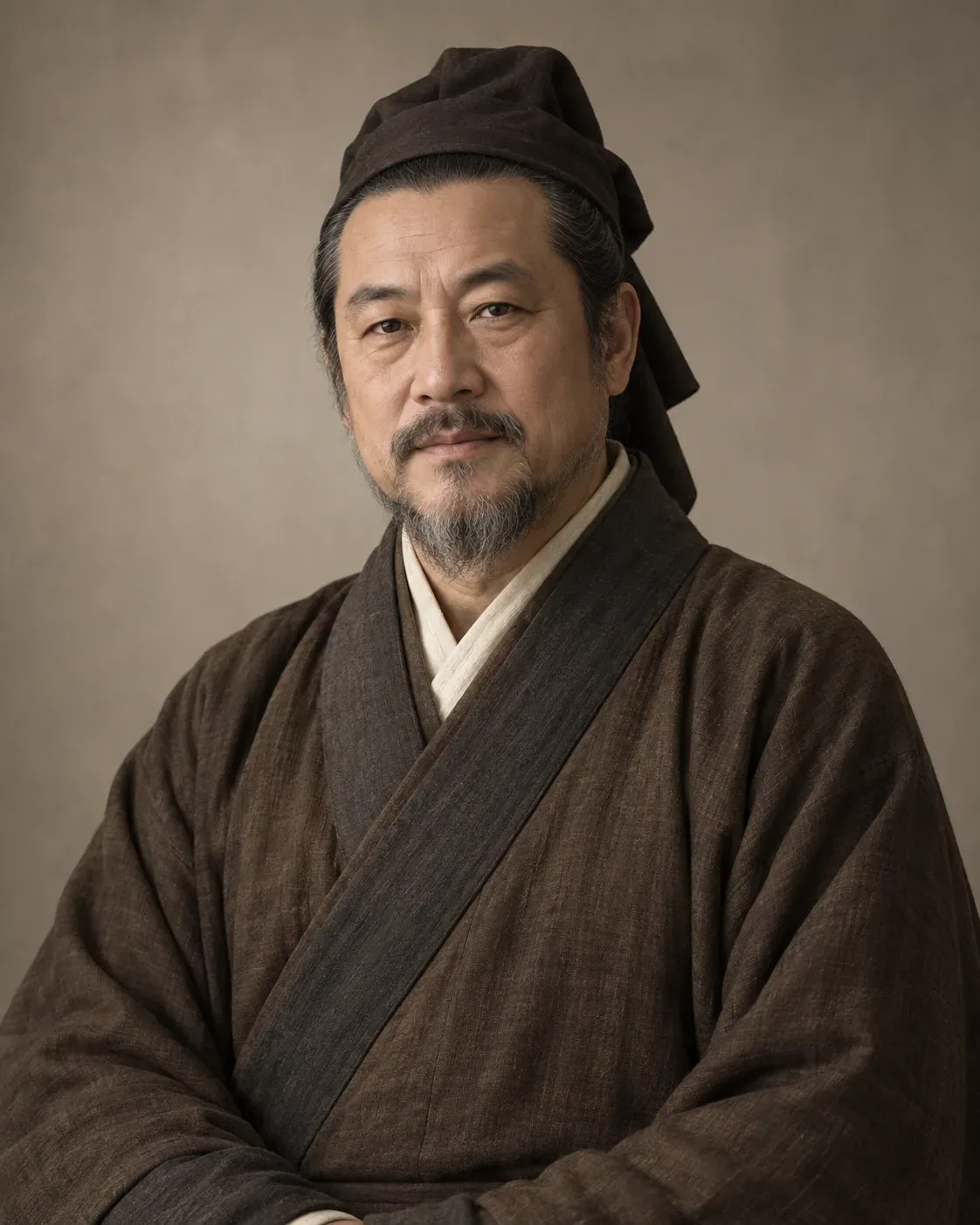
A king asks what profit he will gain
The first chapter of Liang Hui Wang I begins with a king's practical question: what advantage can this visitor bring his state? Mencius does not answer with a technique for acquiring more territory or revenue. He asks what will happen if the ruler seeks profit for the state, ministers seek it for their houses, and everyone else seeks it for themselves. His reply, that humane concern and right conduct must come first, is not a claim that food and material security are unimportant. It asks what will hold political relationships together when the powerful treat their own gain as the only measure of success. This is a useful starting point for the book: Mencius often accepts the ruler's question as a point of departure, then turns attention toward the people who will live with the consequences.
Mencius was a thinker of China's Warring States period, traditionally placed in the Confucian line after Confucius. The text called the Mencius presents him in sustained conversations rather than in a modern treatise arranged by topic. He speaks to rulers, yet repeatedly draws their attention to planting and harvest times, hunger, household livelihood, and the conditions under which people might choose to follow a government. His interlocutors do not always accept his argument. That resistance is part of what makes the exchanges worth reading: the reader can hear the distance between a ruler's wish for order and the changes Mencius says that wish demands. Rather than memorizing a definition of humane government first, follow how each claim arises in a particular exchange.
Follow the questions through Liang Hui Wang I
Begin with Why Speak of Profit? and watch Mencius change the terms of the king's opening question. Continue to I Am Devoted to My State, where grain, the timing of agriculture, and ordinary family life move to the center of political argument. Then read Protecting the People and Becoming King: the king's reluctance to see an ox led to sacrifice becomes the occasion for asking whether compassion can extend beyond what is directly before his eyes. These chapters are connected, but they do not repeat one slogan. The first asks about political aims; the second asks about subsistence; the third asks whether an impulse of care can become a durable way of governing.
This page leads only to the seven chapters of Liang Hui Wang I currently available on ChineseStudy. It should not be mistaken for a claim that the entire Mencius has already been published here. Each chapter pairs the Chinese text with pinyin, a modern Chinese explanation, and an English translation. When a broad term such as ren, yi, or wang appears, begin with what it does in the immediate exchange, then compare how the term works elsewhere. The original passage is a better guide than a memorable English slogan detached from its speaker and setting.
From Zou to the courts of Qi and Liang
Mencius’s exact birth and death years are disputed. Records of the Grand Historian places him in Zou and describes visits to the rulers of Qi and Liang. His arguments met a world intent on wealth and military strength. The opening challenge to King Hui of Liang—why speak first of profit?—answers that political setting, not an abstract classroom question.
The book preserves arguments as well as scenes
The received Mencius brings together sayings, dialogues, and narratives associated with Mencius and his followers. It is not a diary written to satisfy modern expectations of biography. Long conversations with King Hui of Liang and King Xuan of Qi sit beside short judgments and sharply drawn examples. A figure page therefore needs a careful distinction: we can say that the received text depicts Mencius answering in a certain way, but we should not present every detail as a verbatim transcript independently checked against contemporary records. The literary shape of an exchange is itself part of the evidence we have.
The two scenes highlighted here come from the opening and seventh chapters of Liang Hui Wang I. The first shows a ruler asking about profit and Mencius redirecting the discussion toward humane and right conduct. The second begins with a king's unwillingness to watch an ox tremble on its way to sacrifice; Mencius uses that reaction to ask why the king has not extended care to his subjects. Neither passage works well as a detached inspirational quotation. Mencius questions, concedes, tests, and presses his interlocutor. The argument is in that movement, not only in its best-known sentence.
Core ideas
Right conduct before private gain
Why Speak of Profit? challenges the assumption that every level of public life should be measured first by what it can take for itself.
Protecting the people's livelihood
Political allegiance is tied to concrete conditions: food, farming time, family security, and freedom from avoidable harm.
Extending a humane response
The king's response to the ox may be a beginning; Mencius asks whether it can reach people beyond the immediate scene and shape policy.
Representative passages
Why speak of profit?
王何必曰利?亦有仁义而已矣。
Mencius begins by changing the measure in the king's question, not by offering a faster route to gain.
Read chapter 1Do not disrupt the farming seasons
不违农时,谷不可胜食也。
Humane rule involves material arrangements, including when people are allowed to work their fields.
Read chapter 3Protect the people
保民而王,莫之能御也。
The claim about rule begins with care for the people; the passage then tests why the king has not put it into practice.
Read chapter 7Suggested reading path
- Start with the Mencius contents
Seven chapters of Liang Hui Wang I are currently available.
- Read Why Speak of Profit?
Begin with political aims.
- Continue to I Am Devoted to My State
Look at livelihood and the farming seasons.
- Then read Protecting the People
Test whether pity can become humane rule.
Common misunderstandings
Profit is not the same as livelihood
Mencius questions gain as the sole public aim while repeatedly making food, farming, and family subsistence central to his arguments.
A flash of pity is not yet humane government
The ox story identifies a possible beginning. Its force lies in asking why the king has not extended care to his subjects.
The Mencius is not a personal journal
It is a received collection of exchanges and scenes with a history of compilation and transmission; read narrative detail within that textual boundary.