Figure learning hub
Confucius
Meet Confucius through The Analects, core ideas such as ren and li, and a guided path into original passages with translations and notes.
Kongzi · Kong Fuzi · 孔子
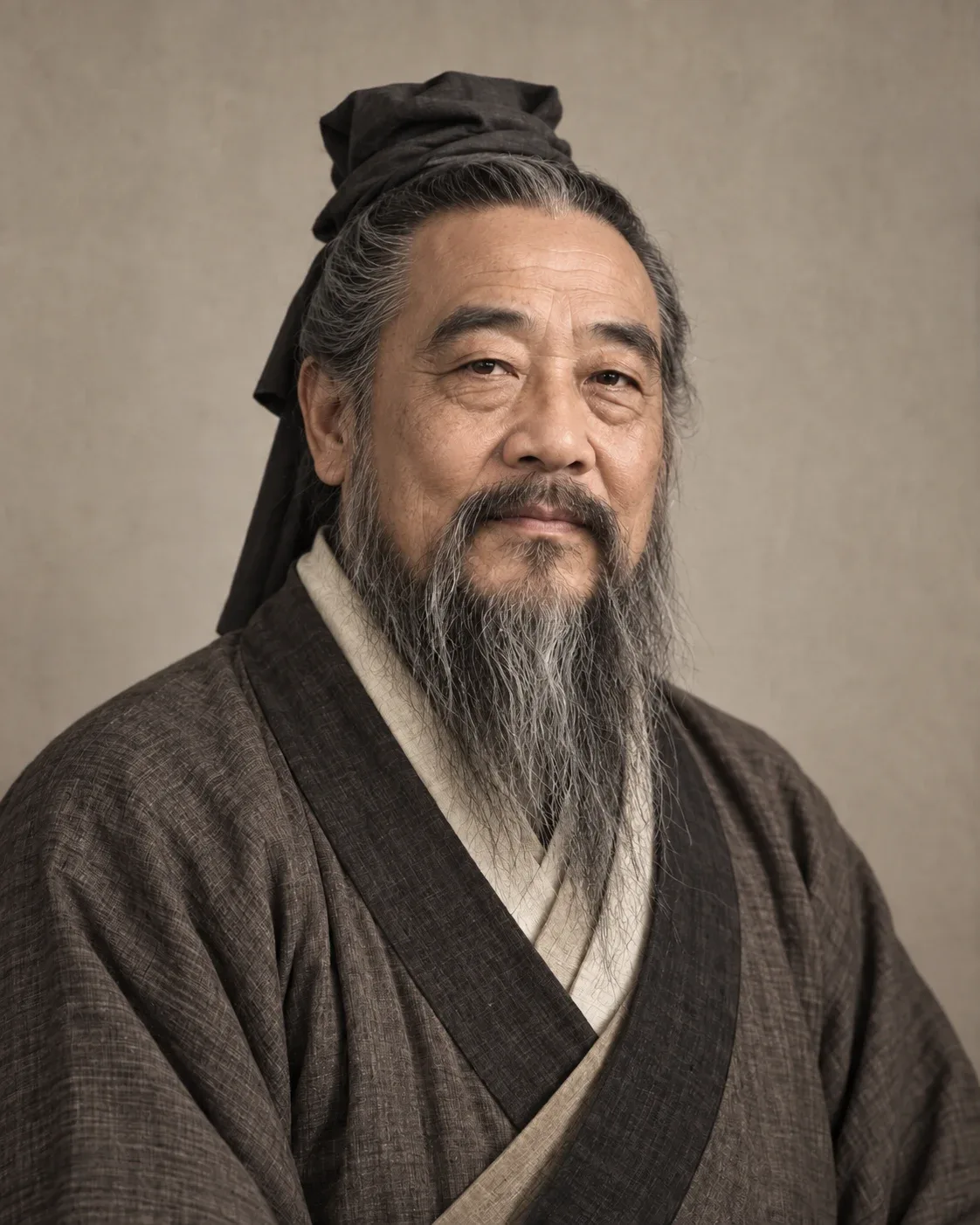
Meet a teacher through learning in motion
Confucius becomes clearer when we stop treating him as a dispenser of quotations and listen to the exchanges preserved in the Analects. A student asks about humaneness, government, friendship, mourning, or study; the answer changes with the person and the situation. That responsiveness is part of the teaching. Ren is not presented as a slogan to admire from a distance. It appears in conduct, attention, restraint, and the difficult work of becoming reliable among other people.
His subjects also refuse to stay in separate boxes. Learning shapes character; character affects government; ritual gives grief and respect a visible form; friendship tests whether a person can correct and be corrected. Read this way, Confucius is not merely a historical name at the entrance to Chinese philosophy. He is a teacher whose classroom extends into meals, journeys, political disappointment, music, and conversation. The ordinary setting is precisely where the larger claims are tested.
Follow the questions his students actually asked
Begin with the speaker and addressee of each passage. When a familiar word such as ren, li, or junzi appears, postpone the urge to give it one permanent English equivalent. Compare how it behaves in several encounters. Book 1 brings learning and practice together; Book 2 connects self-cultivation with governing; Book 4 returns repeatedly to humaneness as a way of choosing and living. Moving among these scenes lets the text revise the simplified Confucius found in motivational quotations.
Lu, the other states, and a return
Confucius (traditionally c. 551–479 BCE) was born in Lu, served there, travelled among other states, and returned to Lu late in life. Records of the Grand Historian traces journeys through Wei, Chen, and Cai. The Analects preserves mostly encounters and replies rather than a continuous diary. Its political sayings belong to a life that met resistance as well as admiration.
The Analects preserves remembered voices, not a book handwritten by Confucius
The received text is a collection of sayings, conversations, and actions associated with Confucius and his circle. Traditional accounts connect its compilation with disciples and later followers. Its compact scenes and abrupt transitions make more sense when it is read as a layered record rather than a modern treatise composed from first page to last by one author. The historical person, the remembered teacher, the transmitted text, and later Confucian interpretation overlap, but they are not identical.
ChineseStudy therefore links the figure to passages that can be checked in their chapter setting. A line is not assigned to Confucius simply because the internet repeats his name beside it. Reading the original wording, its addressee, and neighboring passages reveals how much interpretation is hidden inside a smooth quotation. The relation between Confucius and the Analects is strongest not as an authorship label but as a sequence of teaching moments preserved, arranged, and reread for centuries.
Core ideas
Ren
Humaneness is learned through concrete conduct rather than abstract admiration.
Li
Ritual gives emotion and hierarchy a disciplined, humane form.
Learning
Study becomes meaningful when it changes practice and character.
Representative passages
Learning and practice
学而时习之,不亦说乎?
Begin with learning as repeated practice, not the storage of information.
Read Xue ErGoverning by virtue
为政以德,譬如北辰,居其所而众星共之。
Political order begins with moral orientation before coercive technique.
Read Governing by VirtueLiving in humaneness
里仁为美。
Ren is not only an inner virtue; it shapes where and how one chooses to live.
Read Living in HumanenessSuggested reading path
- Start with The Analects
Use the book page as the map before reading isolated quotations.
- Read Book 1: Xue Er
Begin with learning, practice, and friendship.
- Read Book 2: Governing by Virtue
See how ethical cultivation becomes political order.
- Read Book 4: Living in Humaneness
Return to ren as a daily discipline.
Common misunderstandings
Confucius is not only about obedience
The Analects treats ritual, family, office, and study as training in judgment, not as blind submission.
Ren is not a single English word
Humaneness, benevolence, and authoritative conduct each capture part of the idea, but the passages show how it works in practice.
The Analects is not a modern treatise
It is a layered record of sayings and encounters, so it rewards slow reading across related scenes.