Figure learning hub
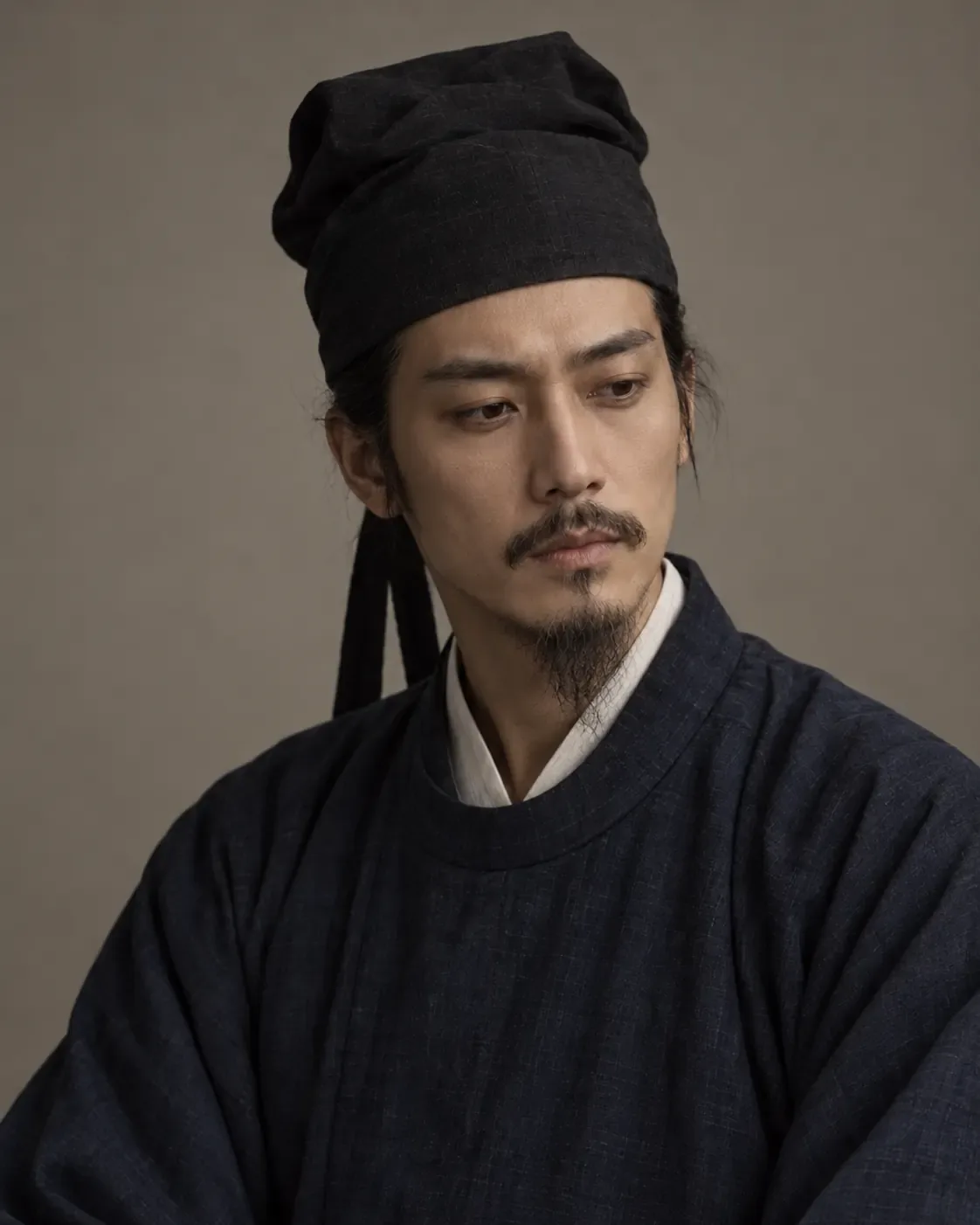
Li Shangyin
Explore Li Shangyin through longing, elusive imagery, and historical satire in Three Hundred Tang Poems.
李商隐 · Li Yishan
Two nights in one poem
In Night Rain Sent North, rain falls in the Ba Mountains while the speaker cannot say when he will return. The closing image imagines a future reunion, when the two will sit by a western window and speak about this very rain. The poem moves between present separation and a hoped-for conversation. That movement matters more than a confident identification of the addressee, whose identity and even the transmitted title have been debated.
Li Shangyin, courtesy name Yishan, lived in the late Tang. The New Book of Tang records his connection with Linghu Chu, service in several official households, and difficult relations amid factional politics. These records help locate him in a world of patronage and office. They do not turn every first-person line in his poems into autobiography.
Beyond the label of love poet
The Brocade Zither begins with a musical instrument and unfolds through dream, birdsong, pearls, tears, and jade-like smoke. Readers have offered many explanations for the poem. Its density invites comparison among them, but the evidence does not authorize one tidy biographical key. A useful first reading follows the movement of its images and the changing pressure of recollection.
Jia Sheng works very differently. An emperor listens to the gifted Jia Yi late into the night, yet the poem ends by saying that he asked about spirits rather than the people. The apparent honor turns into an indictment of misplaced attention. Reading this poem beside Untitled: Meeting Is Hard makes clear that Li could write political irony as well as compressed emotional verse.
Patronage and changing offices
Li Shangyin (c. 813–c. 858) came from Henei in Huaizhou. Linghu Chu supported him early; he later joined Wang Maoyuan’s staff and married into that family. These ties became sensitive amid late-Tang factional conflict. The background informs his political disappointment, but it does not decode The Brocade Zither as a single factional allegory. “Ba Mountains” in Night Rain Sent North identifies the poem’s scene; its addressee and date remain debated.
Biography and poem are different evidence
The New Book of Tang supplies career and relationship details, with judgments shaped by its historians. Three Hundred Tang Poems gives us selected works in distinct voices and genres. A biographical reading may illuminate a poem, but it must not cancel literary form, allusion, or uncertainty.
Core ideas
Time folded back
Night Rain Sent North binds present rain to an imagined later recollection.
Open imagery
The Brocade Zither rewards close attention without yielding a proven single allegory.
Historical irony
Jia Sheng reverses a scene of royal favor into a question about public responsibility.
Representative passages
Night Rain Sent North
君问归期未有期,巴山夜雨涨秋池。
Hold the present scene beside the imagined reunion at the end.
Read Night Rain Sent NorthThe Brocade Zither
锦瑟无端五十弦,一弦一柱思华年。
Begin with sound and recollection before assigning a fixed subject.
Read The Brocade ZitherHistorical irony in Jia Sheng
可怜夜半虚前席,不问苍生问鬼神。
Note how the final contrast changes the scene.
Read Jia ShengSuggested reading path
- Begin with Night Rain Sent North
Trace present and future.
- Then read The Brocade Zither
Follow its shifting images.
- Read Untitled
Compare another voice of longing.
Common misunderstandings
Not only a love poet
His historical poems also deserve close attention.
No settled key to The Brocade Zither
Interpretations can be tested, but speculation should not be presented as a proven occasion.