Figure learning hub
Wang Changling
Read Wang Changling through frontier verse, farewell, and the shifting voice of A Woman’s Lament.
王昌龄 · Wang Shaobo
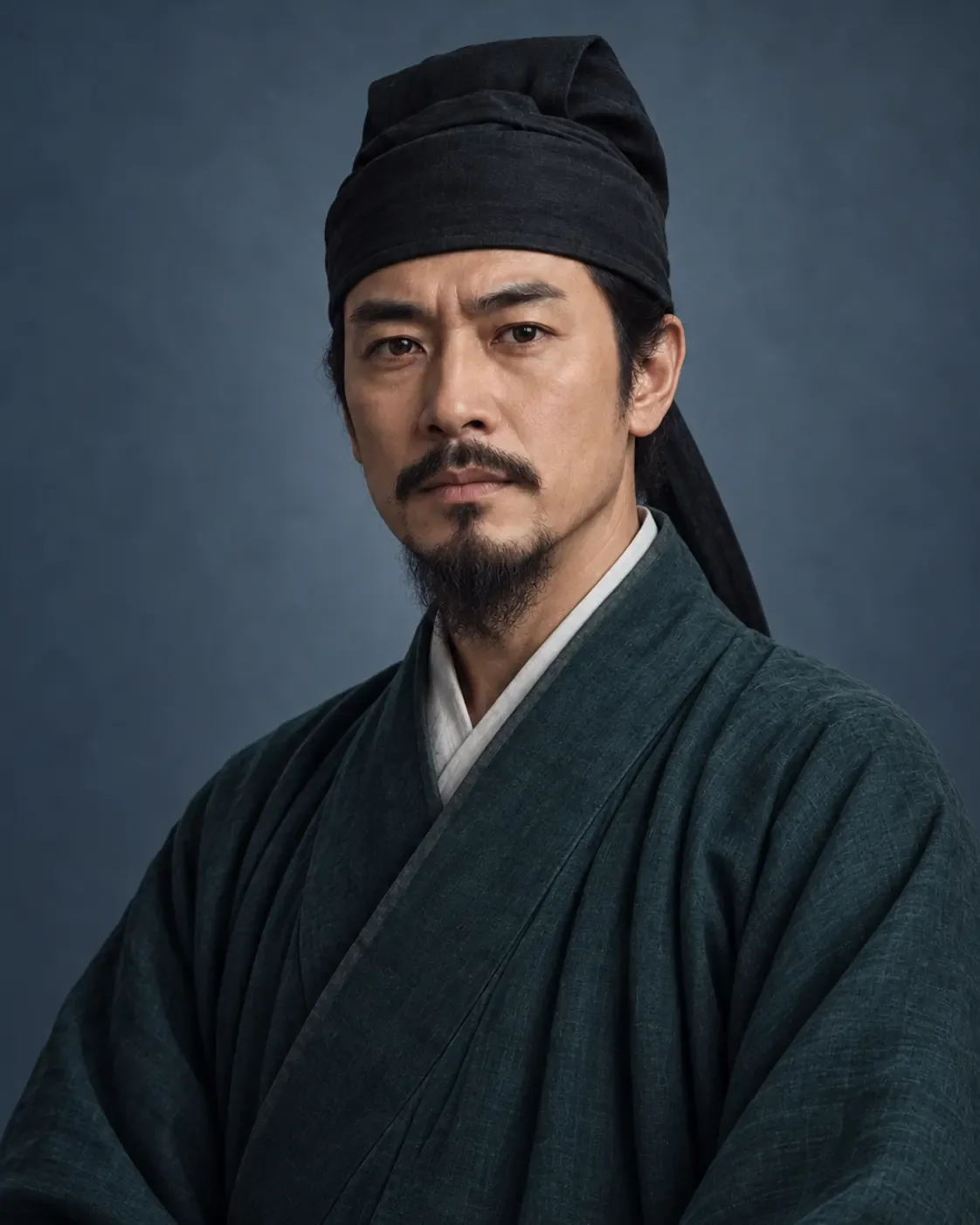
More than a moon above the frontier
The first line of On the Frontier brings together the moon of Qin times and the passes of Han times. It sets a present concern within a long history of defense and absence. The poem is not a report of one verifiable campaign. Alongside its expectation of an able commander, it remembers people who have not returned. Its force lies partly in that cost.
Wang Changling, courtesy name Shaobo, was a High Tang poet. The New Book of Tang records examination success, later demotion to Longbiao, and a violent death during disorder. These facts provide a frame, but they do not make the voice of every frontier poem a direct report of his own military service.
Other speakers, other turns
At Furong Tower, cold rain and river scenery lead into a farewell. The final comparison of the speaker’s heart to ice held in a jade vessel can be read against a difficult career, but it should not be pinned to one unproven accusation. A Woman’s Lament turns on a moment of seeing: a woman who had not felt sorrow catches sight of willow color and suddenly regrets encouraging her husband to pursue rank.
These poems speak from sharply different positions: collective frontier anxiety, a farewell self-description, and a constructed female voice. Their compact turns are part of Wang’s craft. The last of these voices should not be mistaken for a literal episode in the author’s own life.
Beyond frontier verse
Wang Changling (whose life dates remain uncertain) passed the civil examination and was later demoted to Longbiao. Biographical tradition says that he was killed amid the disorder of the An Lushan rebellion. Neither year nor place should be stated more precisely than the evidence permits. Frontier Outpost stretches a border scene across dynasties; the “clear heart in a jade vessel” of his farewell poem is a poetic self-presentation, not a proven reply to one named accusation.
A life and several poetic roles
The New Book of Tang gives a career outline, while the anthology preserves poems of different speakers and subjects. A hoped-for general, a departing friend, and a woman on a tower belong to literary situations. Biography can inform interpretation without dissolving those situations into one memoir.
Core ideas
Layered historical time
On the Frontier puts ancient dynastic markers into a continuing border concern.
A farewell self-description
The Furong Tower poem moves from cold rain to the “ice in a jade vessel” image.
The turn in a quatrain
A Woman’s Lament pivots on a single act of seeing.
Representative passages
On the Frontier
秦时明月汉时关,万里长征人未还。
Hear the long historical span and the absent soldiers.
Read On the FrontierFarewell at Furong Tower
洛阳亲友如相问,一片冰心在玉壶。
Keep the farewell setting beside the self-description.
Read Farewell at Furong TowerA Woman’s Lament
忽见陌头杨柳色,悔教夫婿觅封侯。
Notice the abrupt “suddenly saw.”
Read A Woman’s LamentSuggested reading path
- Begin on the frontier
Time and absence.
- Then visit Furong Tower
Rain, parting, self-description.
- End with A Woman’s Lament
Compare a different speaker.
Common misunderstandings
Frontier verse is not a military memoir
A poet can adopt a frontier view without narrating personal service there.
The “flying general” is not securely one man
Interpret the allusion without suppressing uncertainty.