Figure learning hub
Zhuangzi
Meet Zhuang Zhou through the received Zhuangzi, then read Free and Easy Wandering and Equalizing Things in Chinese and English.
Zhuang Zhou · Chuang Tzu · 庄子
Do not look for the moral too soon
Free and Easy Wandering opens with a fish becoming a vast bird. Soon a smaller bird questions the journey from its own experience of flight. The passage does not settle neatly into a slogan about ambition. It asks readers to notice how distance, capacity, and what one depends on alter a judgment. Zhuangzi's stories often work this way: a familiar standard meets a situation in which it no longer fits.
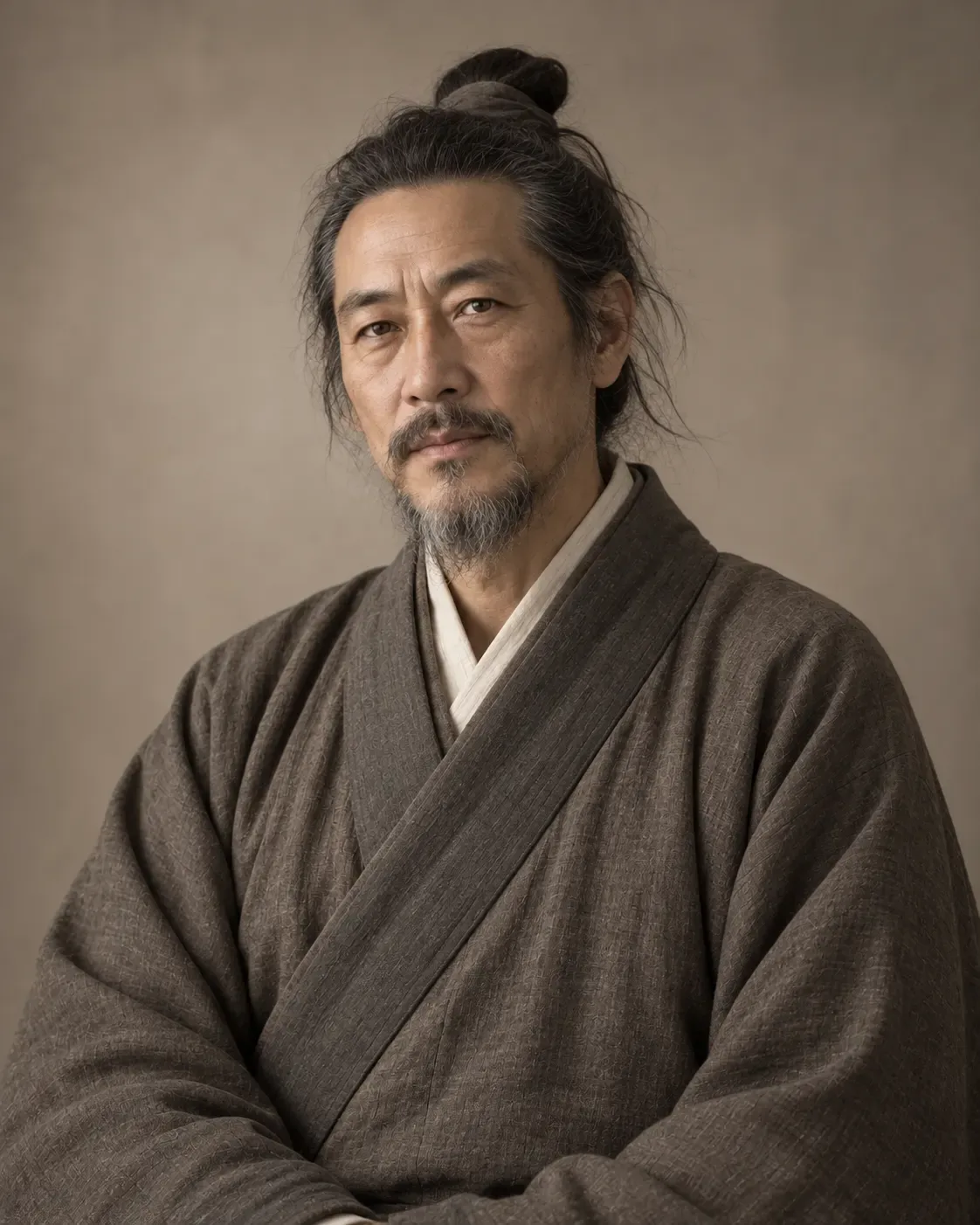
Zhuang Zhou, commonly called Zhuangzi, was a thinker of the Warring States period. The surviving biographical evidence is limited; the Records of the Grand Historian describes him as a man of Meng who once held a minor post at a lacquer garden. The received Zhuangzi is a transmitted collection, not a modern autobiography or a text in which every voice can simply be identified with the historical Zhuang Zhou.
Begin with Free and Easy Wandering and Equalizing Things
Read Free and Easy Wandering first. Follow the great bird, the small bird, and the huge gourd, and ask how each scene changes the measure of usefulness or freedom. Then turn to Equalizing Things and its opening exchange about losing the self. The chapter probes how people become attached to their own distinctions. It does not require us to conclude that every claim is equally sound.
On each chapter page, compare the Chinese, pinyin, modern Chinese explanation, and English rendering. When a sentence seems obscure, identify who is speaking and what has changed in the scene before treating a translated line as a stand-alone maxim.
Follow the familiar stories further
In Nurturing Life, Cook Ding's skill is more than technical mastery. He describes guiding his knife through spaces already present in the ox; Lord Wenhui hears in this an insight into nurturing life. Read the craft alongside the chapter's concern with preserving life and avoiding needless harm.
The Human World introduces the 'fasting of the mind' through a dialogue between Yan Hui and Confucius. The Great Ancestral Teacher sets fish helping one another on dry land beside fish at home in rivers and lakes. Responding to Emperors and Kings ends with Hundun dying after others bore seven openings into him. Each scene has its own setting; none is best read as a detachable life slogan.
Meng, the lacquer garden, and refusal of office
Zhuang Zhou is usually placed in the middle-to-late Warring States era; neither his exact dates nor the location of Meng is settled. Records of the Grand Historian says he held a minor post in a lacquer garden and declined an invitation from the king of Chu. That later biographical story illuminates his suspicion of power without turning every episode in the Zhuangzi into diary evidence.
A thinker and a transmitted book
The received Zhuangzi contains different chapters and narrative voices. The Inner Chapters are a common starting point for reading Zhuang Zhou, but their classification does not independently prove the authorship of every sentence. The figure, the transmitted work, and later biographical writing should be kept distinct.
The great bird is a textual scene from Free and Easy Wandering. The story of declining service at a king's court comes from the later Records of the Grand Historian. One is a philosophical narrative, the other a biographical report; neither should be presented as a verified verbatim transcript of Zhuang Zhou's life.
Core ideas
Freedom and dependence
Free and Easy Wandering places different scales of life beside the conditions on which each depends.
Standpoints and language
Equalizing Things examines attachment to one's own right and wrong without abolishing careful discernment.
Use and uselessness
The huge gourd and other scenes ask whether an object's value changes with the way it is used.
Nurturing life and following the grain
Through Cook Ding's knife, Nurturing Life asks how one can recognize the structure of a situation and avoid needless harm within a finite life.
Living with others without imposing
The fasting of the mind in The Human World and the Hundun fable in Responding to Emperors and Kings ask, in different settings, how our settled ideas shape our treatment of others.
Representative passages
The transformation of Kun and Peng
北冥有鱼,其名为鲲。
The chapter begins beyond ordinary scale and keeps changing the point of view.
Read Free and Easy WanderingLosing the self
今者吾丧我,汝知之乎?
The opening exchange begins an inquiry into self, voices, and settled standpoints.
Read Equalizing ThingsHeaven and earth born with me
天地与我并生,而万物与我为一。
Read this line in the unfolding dispute over this and that, rather than as an isolated final answer.
Return to Equalizing ThingsA finite life
吾生也有涯,而知也无涯。以有涯随无涯,殆已!
The warning follows immediately after the famous opening. The chapter asks how to live with finitude; it does not simply tell readers to stop learning.
Read Nurturing LifeHelping fish on dry land
相濡以沫,不如相忘于江湖。
The preceding lines show fish stranded when a spring dries up. The contrast is not a simple rejection of mutual aid, but one between help in distress and freedom in their own waters.
Read The Great Ancestral TeacherSuggested reading path
- Start with the Zhuangzi contents
Free and Easy Wandering and Equalizing Things are good places to begin.
- Read Free and Easy Wandering
Compare scale, dependence, and use.
- Then read Equalizing Things
Examine standpoints and speech.
- Read Nurturing Life
Read Cook Ding's craft alongside nurturing life.
- Read The Great Ancestral Teacher
Begin with the fish and the rivers-and-lakes image.
- Read Responding to Emperors and Kings
Read the closing fable of Hundun.
Common misunderstandings
Wandering is not doing whatever one wants
The chapter repeatedly examines what a creature relies on; attend to those conditions before making claims about freedom.
Equalizing does not mean every claim is equally true
The text investigates the standpoints behind disputes; it does not eliminate the need to judge concrete claims.
The Zhuangzi is not a personal memoir
The transmitted book, its fables, and later biography are distinct kinds of evidence.